
General Health

A silhouette of a young woman forming a heart shape at sunset in Kelâat M'Gouna, Morocco.

Prioritizing Your Health: The Foundation for a Thriving Life

We live in a world where women juggle multiple responsibilities — career, family, community, and personal growth. Yet, our health often takes a back seat. While men face similar struggles, this article focuses on women. It’s easy to push aside rest, nutrition, and exercise in favor of the next urgent task. But what if prioritizing your health isn’t just about you? What if taking care of your body and mind is the foundation for every other aspect of your life? Prioritizing your health is not about perfection; it’s about intentionality. It’s about realizing that the energy you need to show up for your family, fulfill your calling, or succeed in your career starts with how you care for yourself. When you neglect your health, you’re not just tired—you’re running on reserves that cannot sustain your long-term vision. Here’s why you need to prioritize your health: Your Health Fuels Your Purpose Every woman has dreams, goals, and a purpose to fulfill. I know I do. What about you? Whether you’re building a business, raising children, or leading a community, you need physical, mental, and emotional strength to get there. Your health is the fuel that drives your purpose. Imagine trying to embark on a long journey with a car that has no gas. That’s what happens when you ignore your health, it compromises your ability to live out the vision you hold for yourself and those around you. You’ve likely heard this before: eat well, exercise, and reduce your stress. Eating nutritious food, staying active, and resting intentionally give you the energy to live with vitality. Health isn’t about losing weight (which is the most sought-after reason for a healthier life) or fitting into an ideal; it’s about feeling your best so you can be your best. You Set the Standard for Others As women, we are natural leaders in our homes and communities. Our actions set the tone for our children, spouse, friends, and coworkers. When you prioritize your health, you model self-respect and self-discipline. You teach your children the importance of nourishing their bodies, resting intentionally, and making choices that reflect care and love. Think about it this way: your family sees how you treat yourself. Do they see a woman who loves and cares for herself, or someone who is constantly running on empty? Prioritizing your health builds a culture of well-being in your home, inspiring those around you to do the same. When I start something new, my kids and husband are the first to notice. When they see me doing it, it becomes easier for them to follow. Because, if mummy can, they believe they can too. So, ask yourself: Is my current lifestyle worthy of emulation? Or can it be better? Health Is Your Foundation for Resilience Life is full of challenges – unexpected stress, loss, or overwhelming responsibilities. When you invest in your health, you build resilience to handle life’s pressures. A well-rested body handles stress better. A nourished mind makes clearer decisions. A woman who prioritizes her emotional and physical well-being is less likely to crumble under pressure. Taking just 15 minutes a day for physical activity, prayer, meditation, or intentional breathing can change the way you approach challenges. Health doesn’t have to mean massive lifestyle changes overnight. It’s about small, consistent actions that create strength over time. It’s not stressful or time-consuming. Simply commit to taking intentional steps like progressively incorporating two healthy habits daily until they become a natural part of your lifestyle. Your Health Is an Act of Self-Respect You are worthy of care. I love this statement so much. I remind myself daily: “I am worthy of care.” This is not about binge-eating ultra-processed food while saying, “I can’t come and kill myself.” When you prioritize your health, you affirm your worth. You remind yourself that you are valuable not just for what you do for others, but for who you are. Women often give so much to others that they forget to save a little care for themselves. But pouring from an empty cup is not sustainable. By eating well, moving your body, and resting, you’re choosing to honor yourself. You’re saying, “I matter.” Conclusion Prioritizing your health isn’t about selfishness—it’s about stewardship. It’s about making choices that allow you to thrive physically, mentally, and emotionally so you can show up fully for the people and responsibilities you care about. Start small: drink more water, take a short walk, and rest when you need to. Your health is not a luxury—it’s a necessity for living a full, thriving life. Today, make a commitment to yourself:“My health matters because I matter.”

Prioritizing Your Health: The Foundation for a Thriving Life Read More »
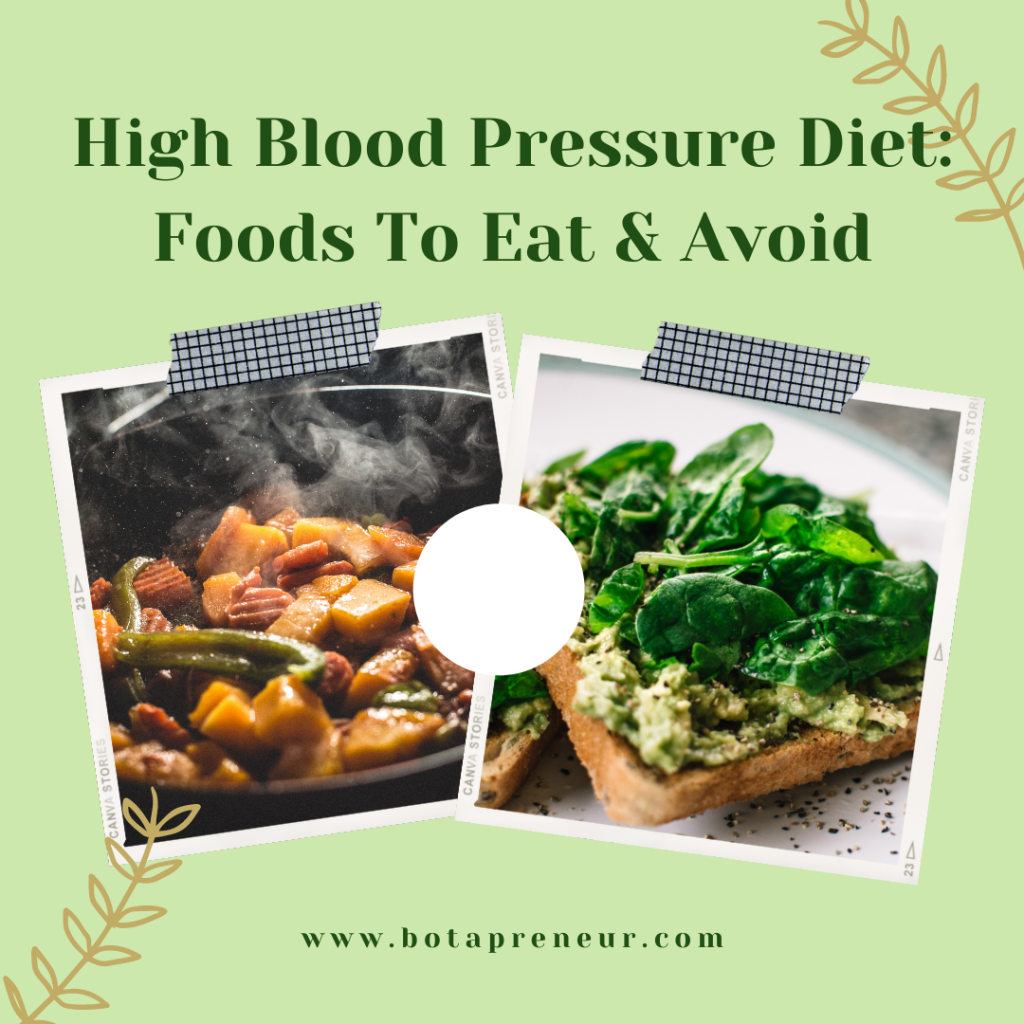
High Blood Pressure Diet: Foods To Eat And Avoid

Blood pressure is the force of blood pushing against the walls of your arteries, the vessels that carry blood from your heart to other parts of your body. It simply reflects how much blood is flowing through your vessels and the resistance the blood meets. Your blood pressure naturally fluctuates throughout the day. However, consistently high or low readings can signal a health concern. There are two key types: Hypertension (High Blood Pressure) Hypotension (Low Blood Pressure) How Blood Pressure Is Measured Blood pressure is recorded as two numbers: Systolic pressure (top number): pressure when the heart beats Diastolic pressure (bottom number): pressure between heartbeats For example, a reading of 120/80 mmHg is spoken as “120 over 80.” Blood Pressure Categories According to health experts, blood pressure levels fall into five categories: 1️⃣ Normal: Less than 120/80 mmHg2️⃣ Elevated: 120–129 systolic and less than 80 diastolic3️⃣ Stage 1 Hypertension: 130–139 systolic or 80–89 diastolic4️⃣ Stage 2 Hypertension: 140+ systolic or 90+ diastolic5️⃣ Hypertensive Crisis: Over 180/120 mmHg requires immediate medical help Common Causes of High Blood Pressure Understanding the root causes can help in prevention and treatment. ✅ Genetics: Hypertension often runs in families✅ Age: Risk increases after age 65✅ Race: More common among Africans✅ Obesity: More weight means more blood flow, which increases pressure✅ Alcohol consumption: Excessive intake raises blood pressure✅ Lack of exercise: A sedentary lifestyle contributes to weight gain✅ Too much salt (sodium): Causes fluid retention, raising blood pressure✅ Low potassium intake: Potassium balances sodium levels in the body✅ Chronic stress: Triggers temporary spikes that may become permanent✅ Underlying conditions: Such as diabetes, kidney disease, and sleep apnea Health Risks of Hypertension Uncontrolled high blood pressure can lead to: Stroke Heart attack Kidney damage Vision loss Erectile dysfunction Poor circulation Heart failure Foods to Avoid If You Have High Blood Pressure 🚫 Processed and fast foods – packed with hidden sodium🚫 Salty snacks – chips, crackers, and salted nuts🚫 Canned soups and sauces – check sodium content🚫 Fried foods and fatty meats – high in saturated fat🚫 Butter, margarine, and full-fat dairy🚫 Sugary foods and drinks – increase weight and risk factors🚫 Regular salad dressings – often high in sodium and sugar Tip: Always read food labels. Sodium hides in many so-called “healthy” foods. Foods to Eat More Often (Heart-Healthy Choices) Fruits High in potassium, antioxidants, and fiber. ✅ Bananas – natural potassium boost✅ Apples, berries, pawpaw – reduce inflammation✅ Watermelon – contains citrulline, which helps blood flow Vegetables Packed with minerals like potassium and magnesium. ✅ Ugu (fluted pumpkin leaves)✅ Spinach, bitter leaf, okra✅ Carrots, green beans, bell peppers✅ Cabbage and broccoli Try steaming, grilling, or lightly sautéing your vegetables instead of overcooking or deep-frying them. Whole Grains Unlike white rice or white bread, whole grains contain all parts of the grain, which means more fiber and nutrients. Fiber slows digestion and keeps your blood sugar and pressure stable.Great options include: Ofada rice Brown rice Oats Whole wheat bread Lean Protein You still need protein, but you don’t need the extra fat from red meat. Choose: Skinless chicken Grilled fish like mackerel and sardines (they contain omega-3s which protect your heart) Natural Herbs & Spices Instead of seasoning cubes and sauces filled with sodium, try natural options like: Garlic – proven to help reduce blood pressure Ginger and basil – fight inflammation and support circulation Turmeric, scent leaf, and thyme – flavourful and medicinal Quick Dietary Tips for Managing High Blood Pressure Drink at least 8 glasses of water daily Cut back on table salt—season with natural herbs Choose fresh over canned foods whenever possible Avoid skipping meals; it leads to unhealthy food cravings Always read food labels—look out for sodium, fat, and sugar content Stick to small portions of high-carb or high-fat meals Practice meal prep to avoid unhealthy food choices You can also read this post on ways to lower blood pressure naturally. Get our specially formulated natural hypertension tea right here, carefully formulated to help manage blood pressure the healthy way.

High Blood Pressure Diet: Foods To Eat And Avoid Read More »

A Healthy Life – Whats Does It Means To Live A Healthy Life

Generally speaking, it is very easy to say one is healthy when the person is free from sicknesses. Right? However, may I inform or remind you again that being healthy is not just about being physically fine alone. The fact that you see someone free from headache or any disease means the person is free from sicknesses. Being healthy cuts across all areas of life and they are interwoven. Someone that is physically fine and not emotionally stable is not healthy. Someone that is emotionally sound and not spiritually standing is not healthy. In fact, being healthy starts with being healthy in our SOULS. 3 John 2 says 👇 ” Beloved, I wish above all things that thou mayest prosper and be in health, even as thy soul prospereth” (KJV) Dear friend, I pray that you may enjoy good health and that all may go well with you, even as your soul is getting along well (NIV). Dear friend, I hope all is well with you and that you are as healthy in body as you are strong in spirit(NLT). Beloved, I pray that in every way you may succeed and prosper and be in good health [physically], just as [I know] your soul prospers [spiritually] (AMP). This writer said that he wished we are in good health EVEN AS/JUST AS our SOULS (spiritual lives) prosper. THIS SIMPLY MEANS THE DEGREE AT WHICH YOUR SOUL PROSPERS IS HOW HEALTHY YOU WILL BE. Most times, we are so quick to quote this verse without thinking deep about the condition “EVEN AS”. The question we should ask ourselves is ARE OUR SOULS PROSPERING? Are we so confident that we can tell God that we want to be physically healthy at the degree at which our souls are prospering? HOW DO WE ENSURE THAT OUR SOULS PROSPER? 1) BY CONSTANT PRAYING. Praying can never be put asides or overly spoken of. A sustained communication with God deepens our relationship and intimacy with Him. And we all know that prayer is the avenue through which we get to communicate with God. Let me share a personal example here: Some days back, I was really afraid. Some things were making me afraid. The fear was so palpable that I could almost literally feel it with my hands. And it was stylishly affecting my efficiency. It got to a point and I started praying and casting out the spirit of fear. And guess what? It worked. I felt an unusual rest and peace after the prayers. Do you know that if the fear in my heart wasn’t dealt with, it would cause me to be mentally disorganized. Before you know it, one will start running temperature and maybe start developing high blood pressure. But PRAYING about the situation settled it all. So, PRAYING is an essential to ensuring that our soul prospers. 2) STUDYING OF THE SCRIPTURES. This goes hand in hand with praying. None of them can work in isolation. If you are fervent in praying and you are not grounded in the Word of God through studying, then you are not prospering in your soul and vice versa. 3) SING: Singing helps keep the soul in perfect harmony. Sing Psalms. Sing Praises. 4) FELLOWSHIPPING WITH OTHER BELIEVERS: The Bible says NOT FORSAKING THE ASSEMBLY OF BELIEVERS. Being among like minded people helps us grow and stay healthy. Now that we have looked at ways by which our soul prospers so that we can be in good health, let us look at some basic things we need to as well 1) DRINKING ENOUGH WATER: Drinking water can never be over emphasized. Not drinking enough water is a veryyyy bad habit oooo. And truth is that many are caught in this web of not drinking water. There are more to just taking water. Do you know there are some sicknesses that can be prevented/cure just by drinking water? Drinking water will naturally prevent or flush out kidney stones. Kidneys are the body’s filtration system but they require a copious amount of water to do their job properly and flush unwanted toxins out. Without proper hydration, the kidneys become unable to filter the blood properly, and you risk all kinds of hilarious nasties, from kidney stones to disease. Please, don’t always wait till you are thirsty before you drink water. Water your life well everyday 🤗. Read: Health Benefits of Drinking Water 2) SLEEPING WELL: Lack of sleep can be very dangerous. Let us endeavour to always find time to sleep well. We need nothing less than 6 hours sleep daily. Good sleep boosts the immune system, enhances mood and improve concentration. Sleeping well is essentially needed to live healthily. 3) EXERCISE: This is one underrated activity human being engage in 😂. Most times, people that lose weight or those in sports are the ones that tend to exercise more. And this ought not to be so. Do you know that exercising helps relieve stress and depression? Yes, it does. Exercising boosts the immune system and strengthens the bone. Exercising also prevents lots of diseases. Exercising helps to keep fit and remain healthy. And the truth is you don’t even have to go to the gym before you can exercise. There are simple home workouts that you can do. There are lots of apps and even YouTube videos that can serve as guides. Do you know that walking itself is a form of exercise. Instead of taking that #50 taxi, you can decide to trek instead. I recently got across a WALKING AT HOME YouTube channel by Leslie Sansone and it’s been super amazing. Very soon, I will also love to add running to my exercise routine 🤗. Let us make exercising a lifestyle. It might not be easy initially but once you get used to it, it becomes much easier and enjoyable. 4) BALANCED DIET/MINDFUL EATING: Recently, I’ve come to realize that it’s not because God has not blessed us with good health. It’s just

A Healthy Life – Whats Does It Means To Live A Healthy Life Read More »

Meaning, Types, Causes, Prevention and Treatments of Diarrhoea

Diarrhoea is almost like an everyday problem. Does it have any tragic effect among the population? What can be done about it? There are some basic facts you need to know about Diarrhoea: 1) Diarrhoea is the second leading cause of death in children under five years old. 2) It is both preventable and treatable. 3) Each year diarrhoea kills around 525 000 children under five. 4) Globally, there are nearly 1.7 billion cases of childhood diarrhoeal disease every year. 5) Diarrhoea is a leading cause of malnutrition in children under five years old.                     What is Diarrhoea? Diarrhoea is defined as the passage of three or more loose or liquid stools per day (or more frequent passage than is normal for the individual). Frequent passing of formed stools is not diarrhoea, nor is the passing of loose, “pasty” stools by breastfed babies.                     Types of Diarrhoea There are three clinical types of diarrhoea: 1) Acute watery diarrhoea – lasts several hours or days, and includes cholera 2) Acute bloody diarrhoea – also called dysentery 3) Persistent diarrhoea – lasts 14 days or longer. Note: The difference between Cholera and Dysentery is that diarrhoea is said to be cholera when there is passage of watery stool while it is dysentery when there is mucous stain or blood in the stool.              Causes of Diarrhoea 1) Diarrhoea is a symptom of infections caused by a host of bacterial, viral and parasitic organisms, most of which are spread by faeces-contaminated water. 2) Malnutrition: A malnourished child or adult has low immunity and any opportunistic infection can result to diarrhoea. 3) Chronic infections: A history of travel or antibiotic use can be clues to chronic diarrhea. Various bacteria and parasites can be the cause. 4) Other causes are Endocrine disorders and Malabsorptive disorders. 5) It can be caused from sources like water or animal feaces used as fertilizers from growing vegetables. Common signs and symptoms of diarrhoea are:– Watery stool (3 or more) in a day Stomach pain Abdominal cramps Bloating Thirst Weight loss Fever Blood or pus in the stools Persistent vomiting Dehydration      So How Can One Prevents Diarrhoea? a) Having access to safe drinking water: Do not drink water until you know the source of the water you are drinking and if you are not sure please boil or chlorinate the water before drinking. b) Maintaining a healthy and hygienic environment : Some persons environment is very untidy and have a lot of breeding site for flies please. To prevent diarrhoea, it is advisable to maintain a healthy environment. c) Always practicing washing of hands with soap and water: d) Exclusive breastfeeding for the first six months of life: (For the nursing mothers and would be, this is very essential). e) Having a good personal and food hygiene. f) Properly washing of fruits and vegetables preferably with salt before eating or cooking. g) Avoiding eating of cold food: Some microorganisms breed on cold foods and may come out leading to diarrhoea. h) Properly storing of foods.    How To Treat Someone With Diarrhoea Key measures to treat diarrhoea include the following: 1) Fluids can be replaced by simply drinking more fluids, or they can be received intravenously(in hospital in severe cases.) Children and older people are more vulnerable to dehydration. 2) Oral rehydration solution or salts (ORS) refers to water that contains salt and glucose. It is absorbed by the small intestine to replace the water and electrolytes lost in the stool. 3) Zinc supplements: Zinc supplements reduce the duration of a diarrhoea episode by 25% and are associated with a 30% reduction in stool volume. 4) Antidiarrheal medication such as Loperamide, or Imodium, is an antimotility drug that reduces stool passage. Loperamide, Imodium,& Bismuth subsalicylate, for example, Pepto-Bismol, reduces diarrheal stool output in adults and children. It can also be used to prevent traveler’s diarrhea. 5) Antibiotics: Antibiotics are only used to treat diarrhea caused by a bacterial infection. It is common with almost everyone to quickly take Flagyl when there is diarrhoea. It not supposed to be because not all diarrhoea are caused by bacterial. From studies by Nutritionists from Stanford Health Care on some nutritional tips for diarrhea: 👉🏼Sip on clear, still liquids such as fruit juice without added sugar. 👉🏼After each loose stool, replace lost fluids with at least one cup of liquid. 👉🏼Do most of the drinking between, not during meals. 👉🏼Consume high-potassium foods and liquids, such as diluted fruit juices, potatoes without the skin, and bananas. 👉🏼Consume high-sodium foods and liquids, such as broths, soups, sports drinks, and salted crackers. 👉🏼Eat foods high in soluble fiber, such as banana, oatmeal and rice, as these help thicken the stool. 👉🏼 Limit foods that may make diarrhea worse, such as creamy, fried, and sugary foods. Foods and drinks that might make the diarrhea worse include: a) Gums, mints, sweet cherries, and prunes. b) Caffeinated drinks and medication. c) Fructose in high amounts, from fruit juices, grapes, honey, dates, nuts, figs, soft drinks, and prunes. d) Lactose in dairy products.                      Complications Dehydration is the most severe threat posed by diarrhoea. During a diarrhoeal episode, water and electrolytes (sodium, chloride, potassium and bicarbonate) are lost through liquid stools, vomit, sweat, urine and breathing. Dehydration occurs when these losses are not replaced. The degree of dehydration is rated on a scale of three. Please note these signs, you might help save a generation unknowingly. 1) Severe dehydration has at least two of the following signs: ✅ lethargyl ✅ unconsciousness ✅ sunken eyes ✅ unable to drink or drink poorly ✅ skin pinch goes back very slowly ( ≥2 seconds ) 2) Some dehydration include two or more of the following signs): ✅ restlessness, ✅ irritability ✅ sunken eyes ✅ drinks eagerly, thirsty 3) No

Meaning, Types, Causes, Prevention and Treatments of Diarrhoea Read More »

Health Benefits of Folic Acid

Let’s talk about acid. Not the regular chemical acid you know. This particular acid is a beneficial one. It is called FOLIC ACID. Folic acid is a form of folate( man-made form) a derivative of vitamin B that is found in fruits , vegetables and nuts and helps protect against some serious birth defects. Do you know that Folic acid is very essential for women the more? Yes, it is. Let me take you through some benefits of folic acid. 1. Folic acid helps in the prevention of birth defects (such as spina bifida and anencephaly). This is key because it is an important ingredient that forms the genetic material. This is why women of childbearing age and those who desire to be pregnant and/or are pregnant are encouraged to take this. Other research links adequate consumption of folic acid to the prevention of autism, cleft lip and palate and rheumatoid arthritis. 2. It helps in the prevention of a form of anemia known as folate-deficiency anemia. 3. Essential in the formation of red blood cells. 4. Recently some studies added that it helps decrease age-related hearing loss. As a B-vitamin, this acid is water soluble and can be found in some foods naturally. Natural foods that contain folic acid are: –          Cabbage –          Egg yolk –          Kidney –          Lettuce –          Papaya –          Kiwi –          Oranges –          Milk –          Spinach –          Sunflower seeds –          Peas –          Lentils –          Jacket potato –          Cauliflower –          Brussels sprouts –          Broccoli It can also be found in fortified cereals, bread, pastas etc When not taken adequately, it can be prescribed or added in some fortified foods. In fact, it is known that a healthy diet does not even have enough folic acid so taking the folic acid pills is also required especially for those trying to conceive or are pregnant. However, only take folic acid pills as prescribed by your doctor. Do not take it in larger amounts or for longer than recommended. It is also essential to take folic acid with enough water. Every woman over age 14 are expected to consume about 400mcg a day and this increases during pregnancy. The easiest way to this is by eating more of leafy vegetables and fruits. When buying canned foods/cereals/ milk, look at the nutrition content as well. (This will help you not only get foods that contain folic acids but also foods that are low in saturated fat and sugar).    

Health Benefits of Folic Acid Read More »

Causes, Symptoms and Treatments of Allergies

There are 100 million allergy-related Google searches a year and hundreds of Facebook pages dedicated to the subject. Allergies are frustrating, restrictive and sometimes frightening conditions and they seem to be rising at an astonishing rate even in developed countries. Allergies are overreactions of the immune system in response to something that is normally harmless. Different allergies are distinct conditions, which have different triggers, symptoms – from mild to life-threatening – and treatments, and occur at different rates in the population. Some allergies have similar symptoms to other conditions. Food intolerances, which can be unpleasant but don’t pose the same threats, are often confused with food allergies, which are less common and potentially dangerous. Some people with asthma, eczema and rhinitis are allergic, while others are not. Allergies can be seen in almost every organ, most commonly in the skin and the mucous membranes. Allergology is the science regarding allergic diseases and their differential diagnoses and mechanisms. The term “Allergy” was first coined on July 24, 1906 as “specifically altered reactivity of the organism. Allergy is not a disease itself, but a mechanism leading to disease. In clinical practice, allergy manifests in form of various different conditions such as anaphylaxis, urticaria, angioedema, allergic rhino-conjunctivitis, allergic asthma, serum sickness, allergic vasculitis, hypersensitivity pneumonitis, atopic dermatitis (eczema), contact dermatitis and granulomatous reactions, as well as the colourful spectrum of food- or drug – induced hypersensitivity reactions. For most people with allergies, the first exposure to an allergen prompts their immune system to produce an antibody called immunoglobulin E (IgE). With each subsequent exposure, their body produces more IgE, which attaches itself to two types of cells in the body – mast cells and basophils. When the allergen attaches to the IgE, the mast cells and basophils are activated to release histamine and other chemicals to defend against the allergen “invader.” The release of these chemicals causes allergic reactions, as the person’s body attempts to rid itself of the allergen “invader.” Common allergies include those to food and airborne allergens such as pollen, mold, dust mites and animal dander, urine and saliva. Allergies can be seasonal, like pollen or certain molds, or year-round, like dust mites. Different types of allergens are more prevalent in different parts of the country or the world.            CAUSES OF ALLERGIES 1) Genetic Disposition: Some people have a genetic tendency towards developing allergies. This is called atopy and is why being allergic can run in families. However, being atopic does not guarantee an allergy will develop, it just means it is more likely. Atopic family members frequently have different kinds of allergies to each other. Identical twins are more likely to have the same allergies. Genetic factors have a role but can’t help us predict exactly who will develop an allergy. 2) Exposure To Allergens: The case of exposure to allergens as a cause of allergy is even more complex. Sometimes exposure to an allergen helps reduce the risk of developing an allergy to it but sometimes exposure to an allergen brings on an allergy. Prolonged exposure to workplace materials such as flour, tobacco dust or the dander of animals can lead to the development of allergic conditions including occupational asthma. Occupational exposure can also give rise to contact allergies to substances such as latex in rubber gloves.                       DIAGNOSIS There is no one allergy test that can alone diagnose an allergy. Each of the diagnostic stages above need to be carried out under the care of a medical professional in conjunction with a face-to-face consultation because results from the tests must be considered in the context of the patient’s medical history. Applied kinesiology looks for muscle weakness after test substances are placed in the patient’s mouth or hands. Muscle weakness has no relationship to whether the patient is allergic to the substance. In fact, results of kinesiology tests are heavily influenced by the tester. Cytotoxic tests (ALCAT, FACT, Bryan’s test) expose a person’s blood sample to test substances. The reaction of the white blood cells is observed. But the reaction of blood cells is the same in people with and without allergies. Food-specific IgG testing (food intolerance test, YorkTest, Hemocode) looks for specific IgG antibodies against food stuffs in the blood. IgG antibodies are part of the immune system with a key role in fighting infections but the best medical evidence has shown elevated IgG levels do not suggest an allergy. Results are frequently positive in individuals who do not have an allergy or a food intolerance. Hair testing in most cases uses electro-acupuncture to look at the electromagnetic resonance of a lock of hair. Hair is not involved in allergic reactions so testing hair samples cannot provide any useful information on allergic status. Nambudripad’s Allergy Elimination Techniques (NAET) is based on the idea that allergies are cause by ‘energy blockage’ and can be diagnosed by muscle testing and cured by acupuncture. There is no credible evidence that this technique can diagnose or treat allergy. Vega test combines acupuncture and homeopathy theory and measures electronic resistance across the skin at various points. The measurements have no relation to allergic status and the test cannot distinguish between people who have an allergy and those who don’t.     TYPES AND SYMPTOMS OF ALLERGY a) Airborne Allergies Airborne allergies can range from seasonal annoyances to year-round problems in the form of allergic rhinitis (symptoms of the nose and throat) and/or allergic conjunctivitis (symptoms of the eyes). Airborne allergy symptoms include: Sneezing Itchy nose/throat Nasal congestion Coughing Itchy, watery and/or red eyes Dark circles around eyes Common airborne allergies include; Dust, Pollen, Mold, Pet dander, saliva and urine b) Food Allergies Severity and development of food allergies depend on the quantity of the food eaten, the amount of exposure an individual has had, and the child’s sensitivity to the food. Food allergies are usually not lifelong, with the exception of certain peanut, tree nut and

Causes, Symptoms and Treatments of Allergies Read More »

Mouth Odour: Causes, Prevention and Treatments

Mouth Odour or bad breath medically known as Halitosis is a common problem and is usually simple and preventable. WHAT IS HALITOSIS? Halitosis is an unpleasant smell coming from the mouth. It can occur on occasion or it can be a chronic condition. Halitosis is an embarrassing condition caused by a group of anaerobic, sulfur producing bacteria that breeds beneath the surface of the tongue and often in the throat and tonsil area. These anaerobic bacteria assist in digestion by breaking down of protein into Amino acids and in the process they excrete waste as odorous and bad tasting compound that cause bad breath. CAUSES OF HALITOSIS There are many risk factors and causes for Halitosis and even healthy people have bad breath on occasion. 1) Food: is a primary source of bad odor that come from the mouth, some foods such as garlic, onions, spicy foods, exotic spice (such as curry), cheeses, fish and acidic beverages such as coffee can leave a lingering smell. Most of the time, the odor is short lived. Other foods may get stuck in the teeth promoting the growth of bacteria and dental plaques which causes bad odor. Low carbohydrate diets may also cause the body to burn fat as it’s energy source. The end- product of making this energy is ketones, which cause a fruity acetone- like odor on the breath when exhaled. This fruity odor in a diabetic might indicate uncontrolled blood sugars. 2) Tobacco products: Smoking and chewing tobacco can leave chemicals that remain in the mouth. Smoking can also precipitate other bad breath causes such as gum disease or oral cancers. 3) Poor oral health: When a person does not brush or floss her teeth regularly, food particles remaining in the mouth can rot and cause bad odors. Poor dental care can lead to a build up on the teeth can also lead to an unhealthy condition called periodontal (gum) disease. When plaque hardens,it is referred to as *Tartar*(calculus). Tartar holds bacteria that can irritate the gum and lead to gum disease. The mild form of gum disease is called gingivitis;if gingivitis is not treated,it can advance to periodontist. 4) Health problems: Sinus infection,pnueumonia, sore throat (pharyngitis) and other throat infections,the common cold influenza(flu), tonsil stone(tonsillitis),thrush, bronchitis, postnasa drip, diabetes, acid reflux,(gastroesphageal reflux disease), lactose intolerance, other stomach or digestion problems and some liver diseases or kidney diseases may be associated with bad breath.   5) Dry Mouth: also called xerostomia. Dry mouth can also cause bad breath. Saliva helps moisten and cleanse the mouth and when the body does not produce enough saliva,bad breath may result. Dry mouth may be caused by salivary gland problems, connective tissue disorder medications or breathing through the mouth. 6) Allergies: Many medications used to treat allergies can cause dry mouth, another cause of .In addition,post nasal drip is a common allergy symptom that can result in bad breath. Sinus congestion due to allergies can also cause people to breathe from their mouths causing dry mouth. 7) Mouth infections: Cavities, gum disease or impacted teeth may cause bad breath. 8) Dentures or braces: Food particles not properly cleaned from appliances such as braces can rot or cause bacteria and odor. Some people wear brace to correct their teeth but don’t manage it well. Loosing fitting dentures may cause sores or infections in the mouth, which can cause bad breath. For people that are using denture As a young lady or woman,is not advisable to be using denture because of its effect on the gum. So is better you go for either bridge or implant,though is more expensive but better and safer. 9) Medications: Many medications including antihistamine to treat allergies and diuretics can cause dry mouth which can cause bad breath. Other medications that may lead to bad breath may include triamterene and paraldehyde. 10) Morning breath: Bad breath in the morning is very common. Saliva production nearly stop during sleep, allowing odor causing bacteria to grow causing bad breath. A times when you wake up in the morning,you this discover that your mouth smell. 11) Pregnancy: Being pregnant in itself does not cause bad breath, but the nausea and morning sickness common during pregnancy may cause bad breath. In addition, hormonal changes, dehydration and eating different foods due to cravings may also contribute to bad breath during pregnancy. Other causes of bad breath: objects stuck in the 👃 nose (usually in children),so as mothers or intending mothers, you have to check your children nose when you discover bad breath from them. Alcoholism, and large doses of vitamin supplements may also cause bad breath. Not every supplements you will take, some sisters doesn’t have problem they just want to take the supplements as if is food ehn🤷🏻‍♀🤷🏻‍♀ PREVENTION AND TREATMENTS OF HALITOSIS 1. Stimulate your salivary flow : As have said before, a dry mouth gives the perfect environment for the group of anaerobic bacteria that causes mouth odor. So avoid a dry mouth by stimulating the flow of saliva in your mouth will help us to get rid of mouth odor. This can be done by chewing gum, lozenges or mints that are sugar free. The one that contain xylitol,a non-sucrose sweeter are best because they help you avoid cavities. You can also have a bottle of water handy to drink from time to time throughout the day to keep your mouth from getting dry. 2. Good dental hygiene How many time are we supposed to brush a day? Brush your teeth twice a day (in the morning when you wake up and at night before you sleep but not immediately after dinner, you have to wait for about 30mins to an hour before brushing) It is very important you don’t neglect to brush your teeth at night because while you sleep little or no Silva is being produced, so anaerobic bacteria have the perfect environment to thrive throughout your eight hours of sleep. Brushing your mouth before you sleep will help

Mouth Odour: Causes, Prevention and Treatments Read More »

Shopping Cart

Planning an Event? Secure your 100% natural drinks with 2-week advance booking.